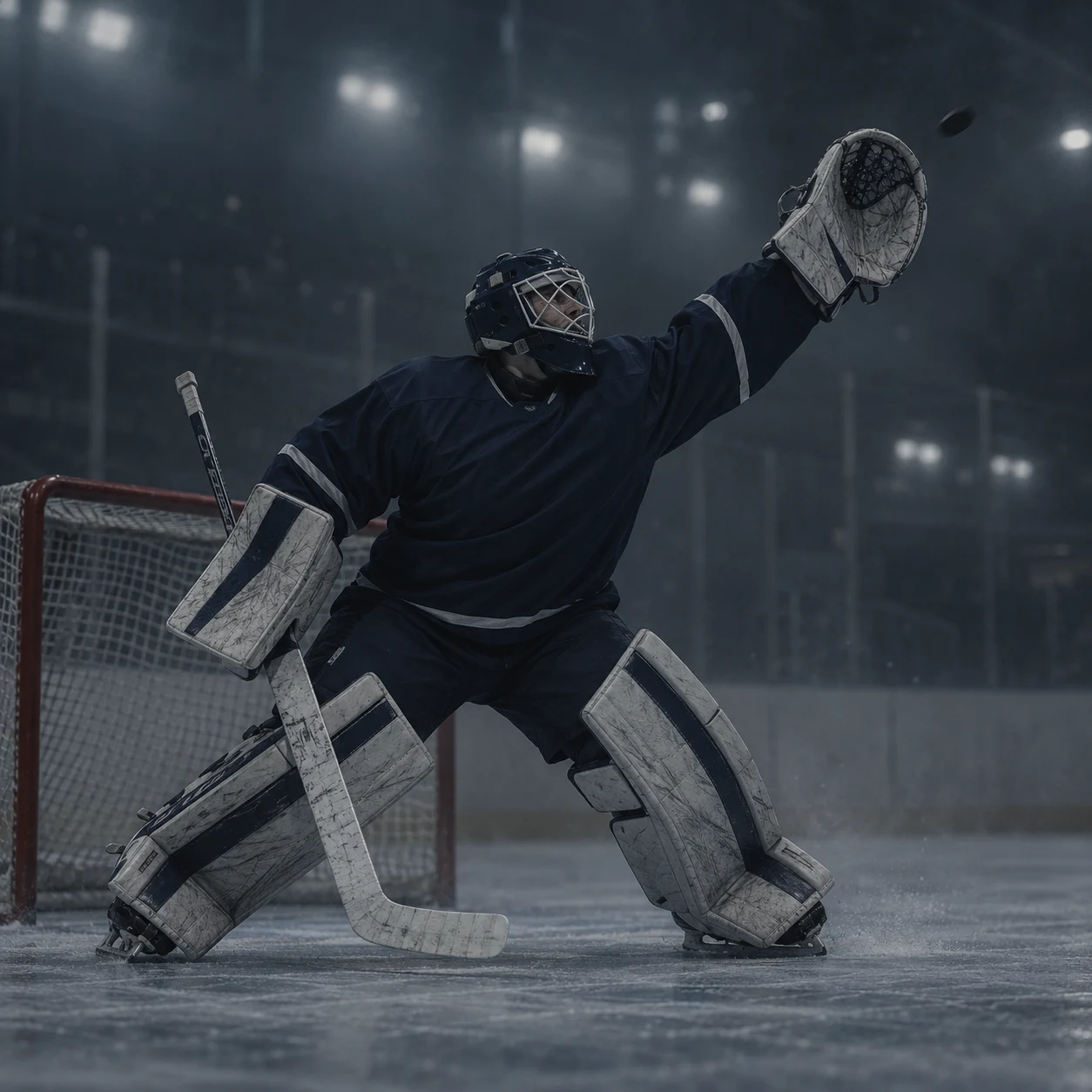
For Kellersberger, the response after contact is part of the appeal. Good rebound management complements his movement in net and puck-stopping ability, making the full sequence a useful lens for evaluating his contribution. For Anaheim Jr. Ducks 18U, those strengths are evaluated within the demands of his 2008-born comparison.
Kellersberger’s published 2025–26 record for Anaheim Jr. Ducks 18U lists 21 appearances: 2.04 GAA, .926 save percentage. The season figures add a performance reference for Kellersberger’s evaluation within the demands of Anaheim Jr. Ducks 18U. Across that sample, 92.6% of recorded shots were stopped.
The projection for Kellersberger follows how his crease tools hold up when the attack changes before a full reset is possible. The Anaheim Jr. Ducks 18U season provides the starting point for assessing that progression.
The development emphasis is making the first save repeatable while preserving options for the second: tracking the release, directing rebounds and reconnecting to a changed shooting angle.
SCOUTING BREAKDOWN
Crease Toolkit
For Kellersberger, the response after contact is part of the appeal. Good rebound management complements his movement in net and puck-stopping ability, making the full sequence a useful lens for evaluating his contribution. For Anaheim Jr. Ducks 18U, those strengths are evaluated within the demands of his 2008-born comparison.
Performance in Context
Kellersberger’s published 2025–26 record for Anaheim Jr. Ducks 18U lists 21 appearances: 2.04 GAA, .926 save percentage. The season figures add a performance reference for Kellersberger’s evaluation within the demands of Anaheim Jr. Ducks 18U. Across that sample, 92.6% of recorded shots were stopped.
Development Focus
The development emphasis is making the first save repeatable while preserving options for the second: tracking the release, directing rebounds and reconnecting to a changed shooting angle.
2025–26 STATISTICS
Anaheim Jr. Ducks 18U · 2025–26
21Games played
2.04GAA
.926Save %
—Shutouts
Season statistics · 21 GP; qualifying minimum 20 GP. One competition record; overlapping schedules are not combined.
Following the puck through passes, shots and traffic to stay connected to the play.
Crease movement
Moving within the goal crease to adjust position as the attack changes.
Depth management
Choosing how far out from the goal line to play, balancing net coverage with recovery time.
Rebound management
Absorbing a shot or directing the saved puck away from an immediate follow-up chance.
Second-save structure
Regaining a balanced, ready position after the first save to handle another attempt.
Post exits
Moving away from the goalpost into position for a new shooting threat.
Supporting scouting coverage
Player identity and season record
Research last reviewed: October 4, 2026. Birthplace refers to the publicly listed U.S. state of birth. Assessment combines scouting observations, technical assessment and verified performance context.