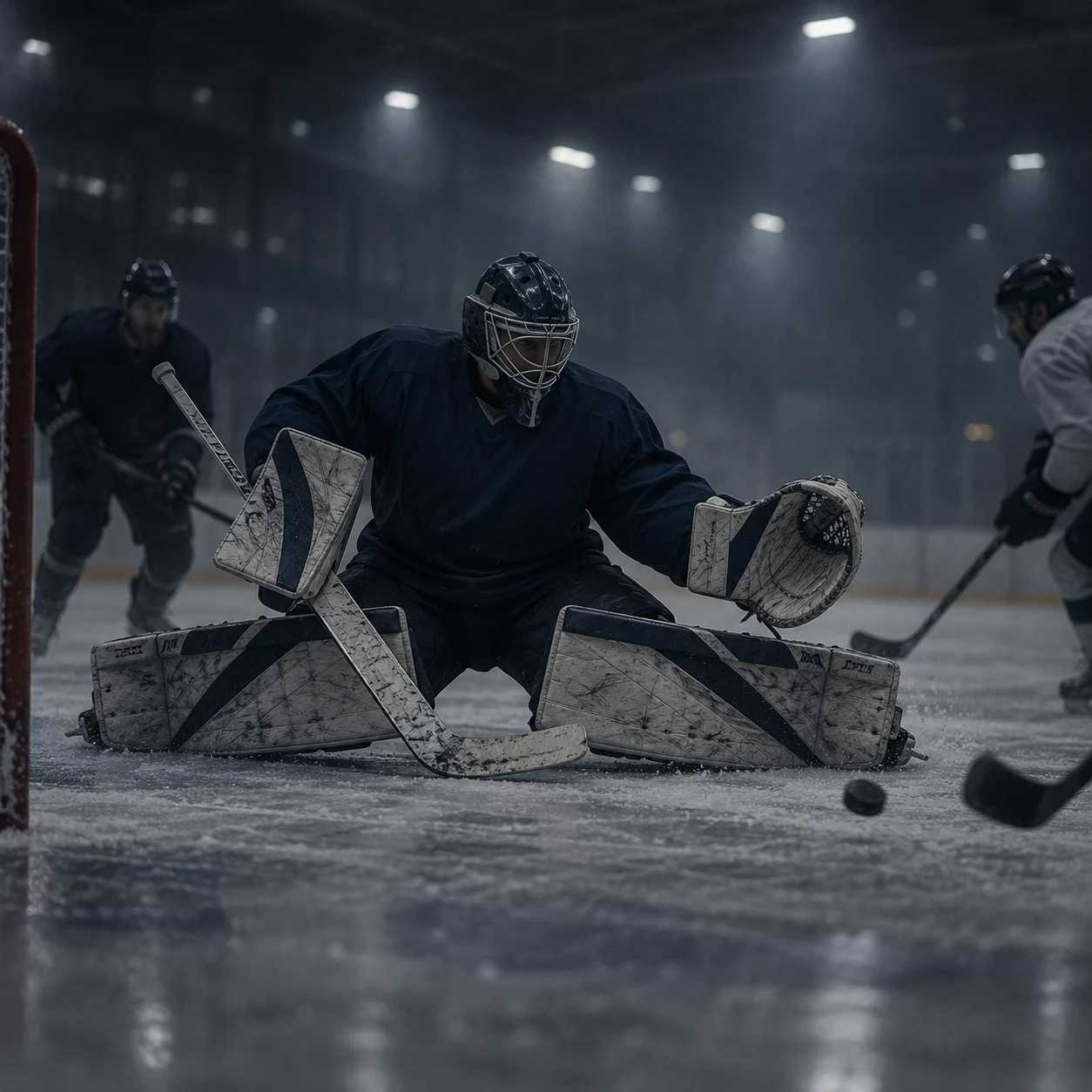
Courville offers a sound combination of movement and puck control in net. The crease mobility gives his game an active component, while his rebound work contributes to the quality of the stop rather than simply its outcome. His role with Flint Firebirds gives that technical foundation its competition setting in the 2009 group.
The Flint Firebirds assignment places Courville in his season’s competitive setting. AHP’s 2009 comparison draws on the available scouting and program record alongside his technical foundation.
AHP’s next-level view of Courville considers the repeatability of his save response as the competition becomes more demanding. That is the progression AHP will look for after his season with Flint Firebirds.
WHY THIS PLACEMENT
Courville’s #3 placement reflects meaningful experience in the OHL at a young age and subsequent NCAA recruitment. His published Flint record contains 18 appearances, below AHP’s 20-game qualifying threshold, so it is considered as competition context rather than a qualifying statistical comparison. AHP values that development progression while distinguishing the demands of major-junior play from proof of season-long dominance.
Continued evaluation should follow how his reads and skating work together: recognizing a pass early, selecting the right route across the crease and retaining control when a play extends.
SCOUTING BREAKDOWN
Crease Toolkit
Courville offers a sound combination of movement and puck control in net. The crease mobility gives his game an active component, while his rebound work contributes to the quality of the stop rather than simply its outcome. His role with Flint Firebirds gives that technical foundation its competition setting in the 2009 group.
Performance in Context
The Flint Firebirds assignment places Courville in his season’s competitive setting. AHP’s 2009 comparison draws on the available scouting and program record alongside his technical foundation.
Development Focus
Continued evaluation should follow how his reads and skating work together: recognizing a pass early, selecting the right route across the crease and retaining control when a play extends.
2025–26 STATISTICS
No qualifying 2025–26 Elite Prospects statistical line contributes to this assessment. The ranking rests on available scouting and competitive context.
Following the puck through passes, shots and traffic to stay connected to the play.
Crease movement
Moving within the goal crease to adjust position as the attack changes.
Depth management
Choosing how far out from the goal line to play, balancing net coverage with recovery time.
Rebound management
Absorbing a shot or directing the saved puck away from an immediate follow-up chance.
Second-save structure
Regaining a balanced, ready position after the first save to handle another attempt.
Post exits
Moving away from the goalpost into position for a new shooting threat.
Supporting scouting coverage
Player identity and season record
Major-junior season record
Official NCAA recruitment announcement
Research last reviewed: October 5, 2026. Birthplace refers to the publicly listed U.S. state of birth. Assessment combines scouting observations, technical assessment and verified performance context.